The Cangosta do Estêvão Trail is an urban walking route that links the Casa-Museu de Camilo Castelo Branco, in São Miguel de Seide, to the Mosteiro de Landim. Along the way, it crosses a rustic, inhabited area, shaped by its built landscape and by the literary memory of Camilo Castelo Branco.
This urban signage project for the Trilho da Cangosta do Estêvão, brought together different entities that cooperated on the signage design. Together with Câmara Municipal de Vila Nova de Famalicão, Casa de Camilo – Museu | Centro de Estudos, and the company Razão, Floema® produced and installed all the custom urban signage for the trail.
Informative signage
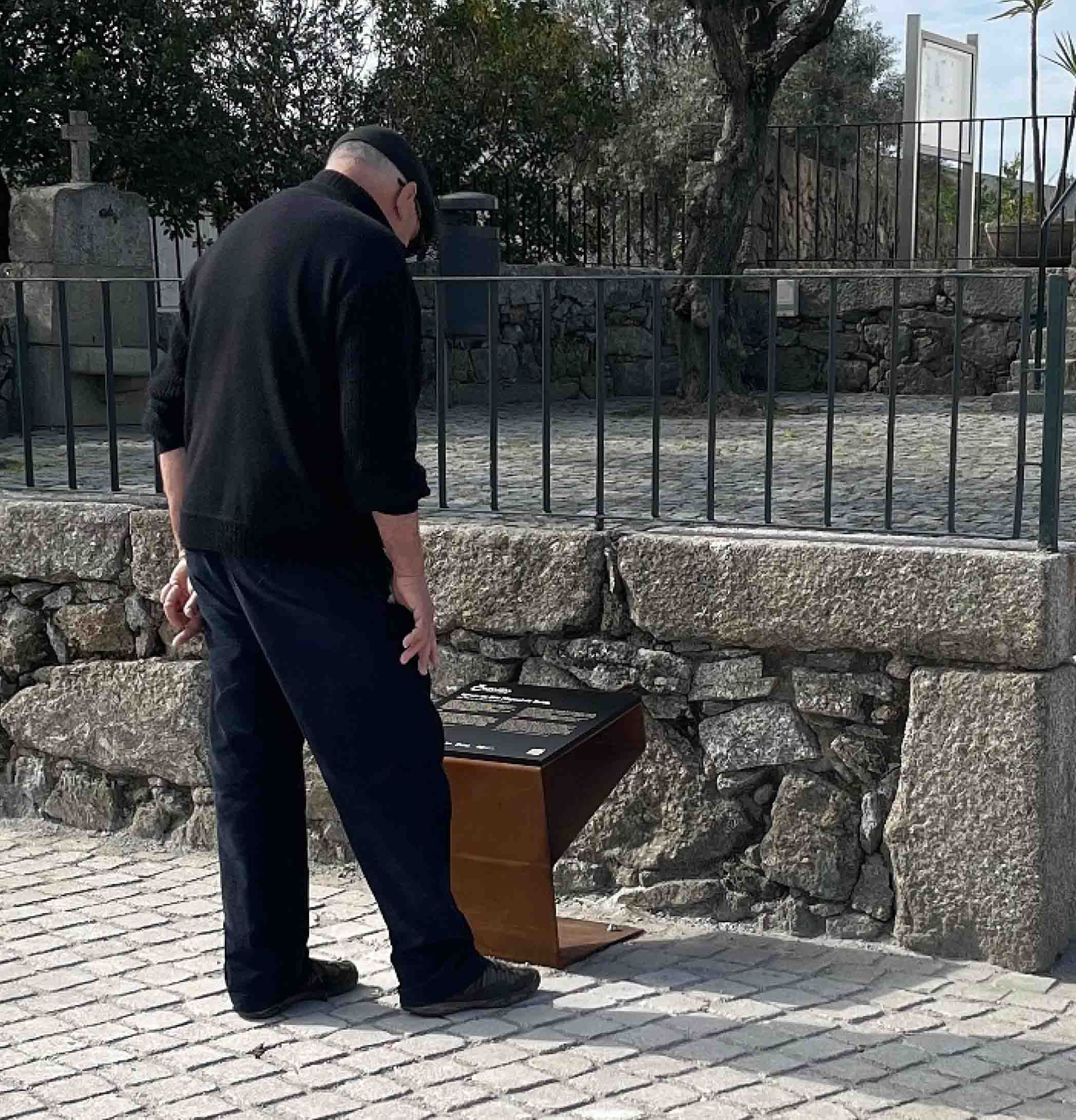
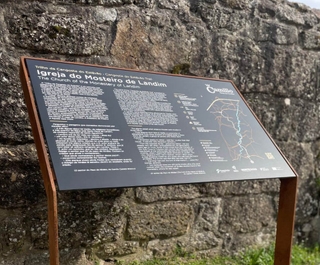
Custom urban interpretive table, made of corten steel and HPL+.
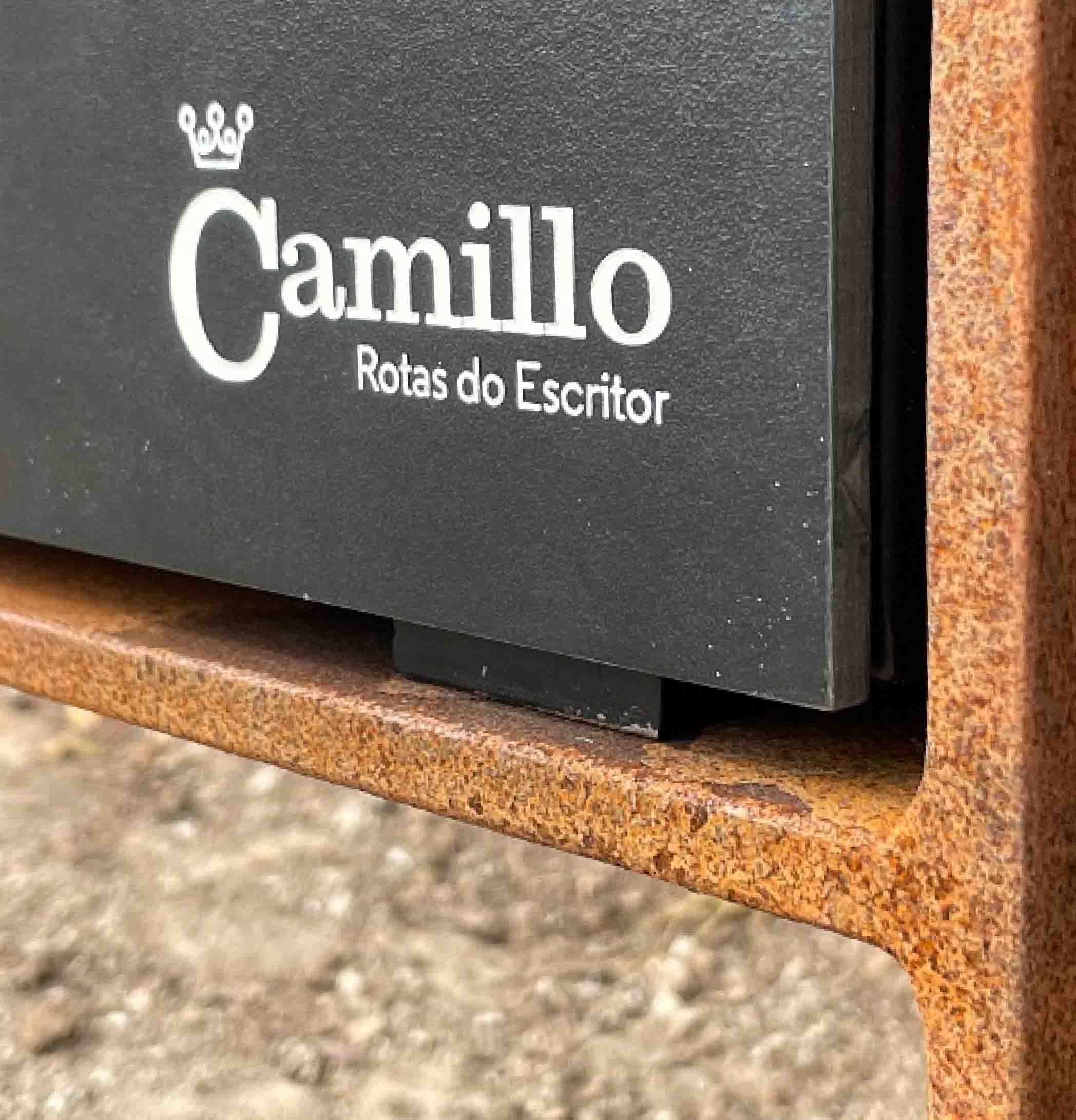
Informative signage organises the reading points along the route. It introduces maps, heritage content, and literary context. These supports help visitors understand the territory they cross. They reinforce the cultural dimension of the trail and promote a continuous reading of the built landscape.
Information totems
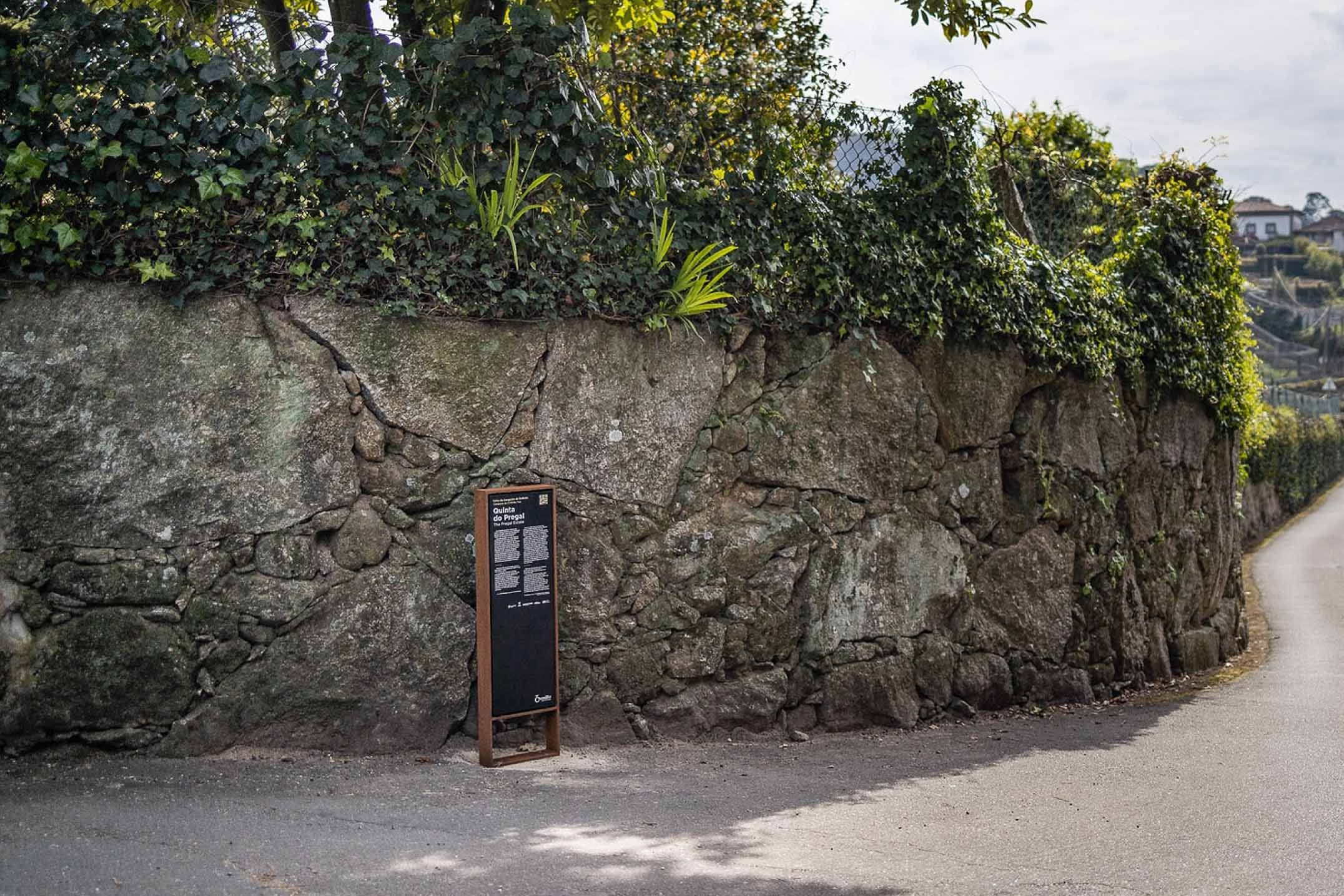
Frame information totem in corten steel
The Frame information totems support the framing of heritage. Installed at strategic points along the trail, they provide a reading of the cultural and built heritage. They are produced with a corten steel structure and HPL+ panels, with information engraved by CNC/laser and finished with two-component polyurethane paint.
Frame interpretive tables
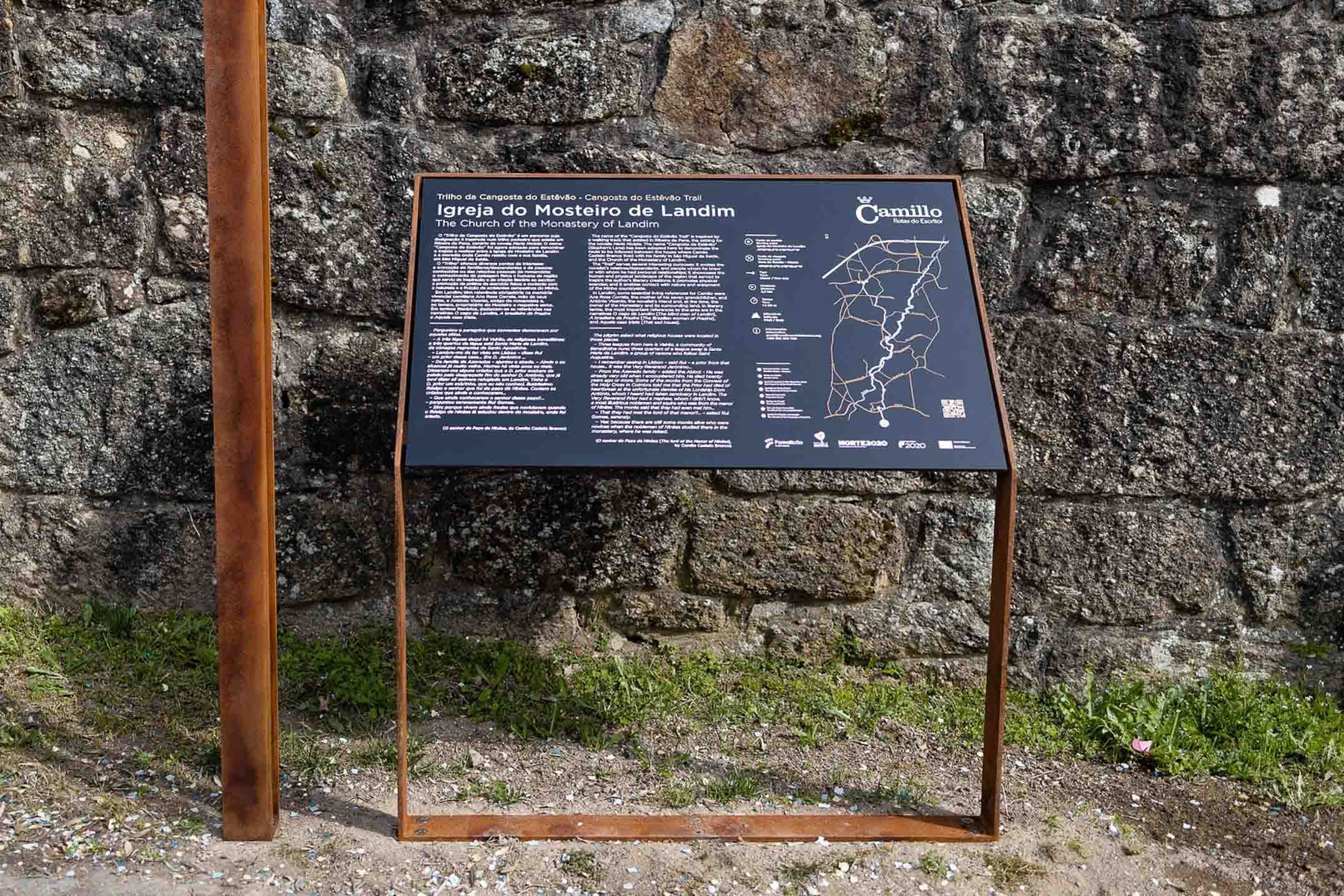
Frame interpretive table in corten steel
The Frame interpretive tables follow the route at strategic points, presenting the map of the urban trail and its points of interest. This communication is essential to introduce visitors to the world of the trail and to prepare them for the richness of the built heritage and the literary references associated with Camilo Castelo Branco.
With a corten steel structure and information in HPL+, these supports combine the rustic aesthetics of the space with consistent legibility and resistance to weather.
Custom interpretive tables
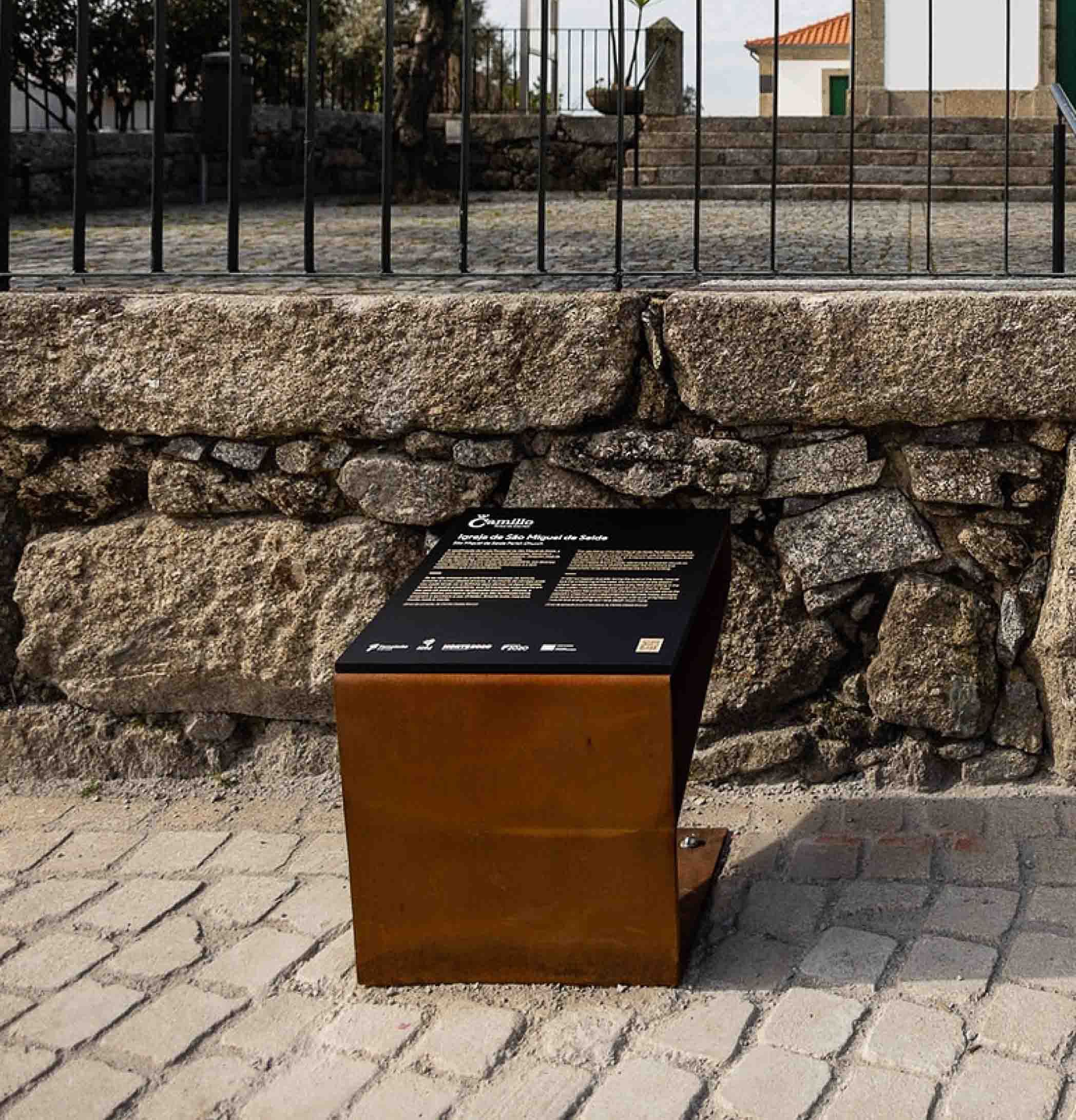
Custom corten steel table for urban route
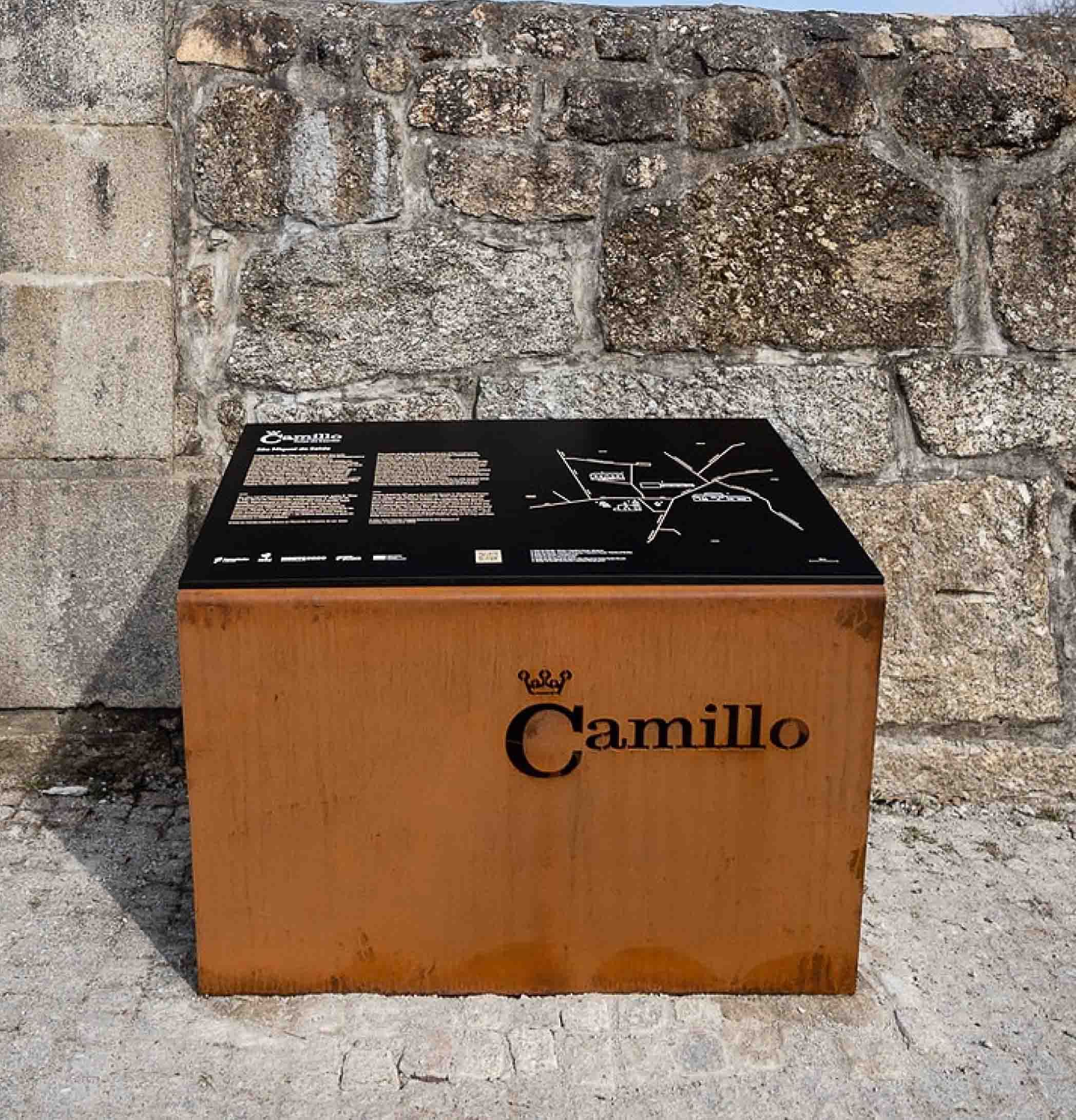
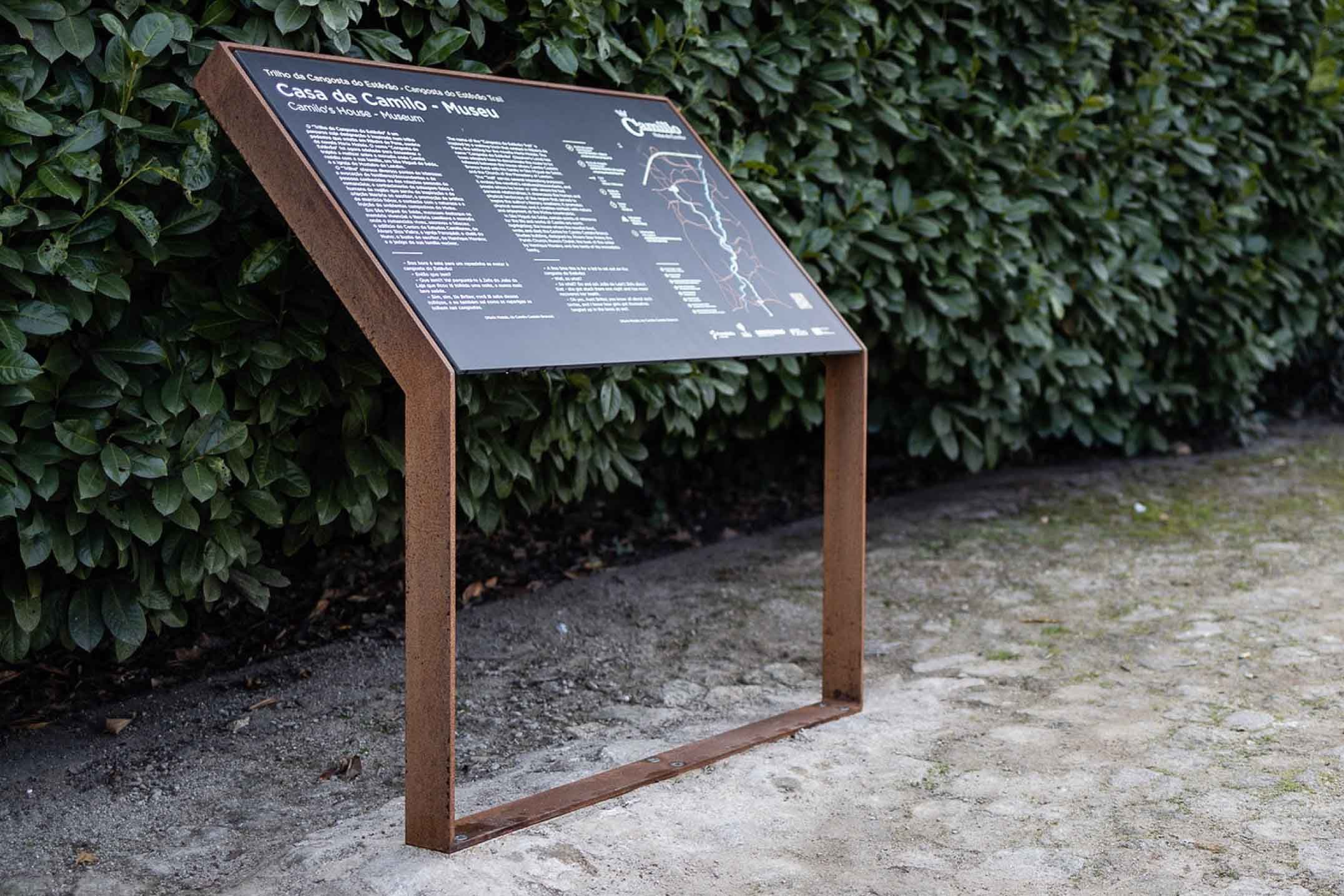
In specific locations, interpretive tables with custom design were developed, adjusted to the morphology of the urban spaces and to their relationship with the surrounding buildings.
These corten steel structures incorporate HPL+ panels engraved by CNC/laser, maintaining material and formal coherence with the overall system.
Directional signage
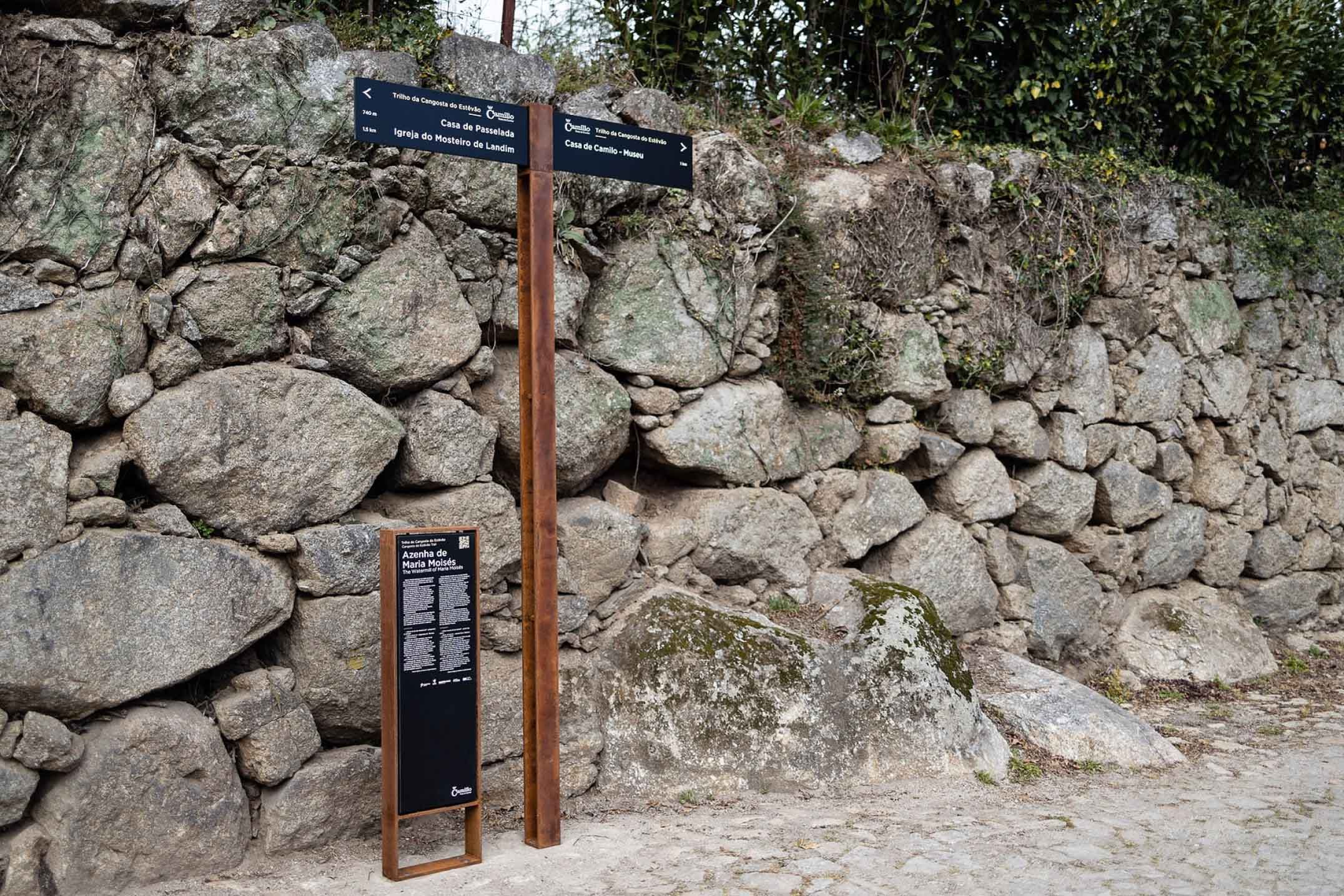
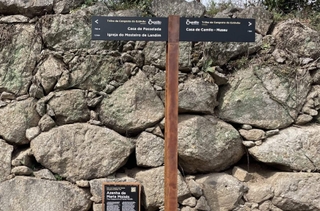
Frame information totem and directional signs
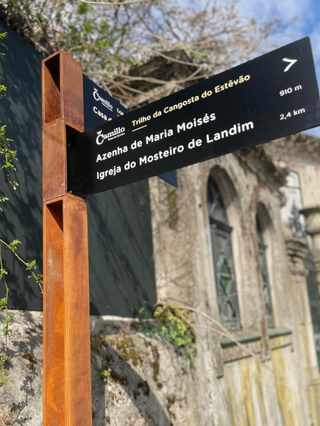
Directional signage ensures orientation along the route. It guarantees clarity, continuity, and legibility in the different urban and rural sections. These elements accompany people as they walk without interfering with the reading of the space. They make the route accessible and intuitive.
Frame directional posts and signs
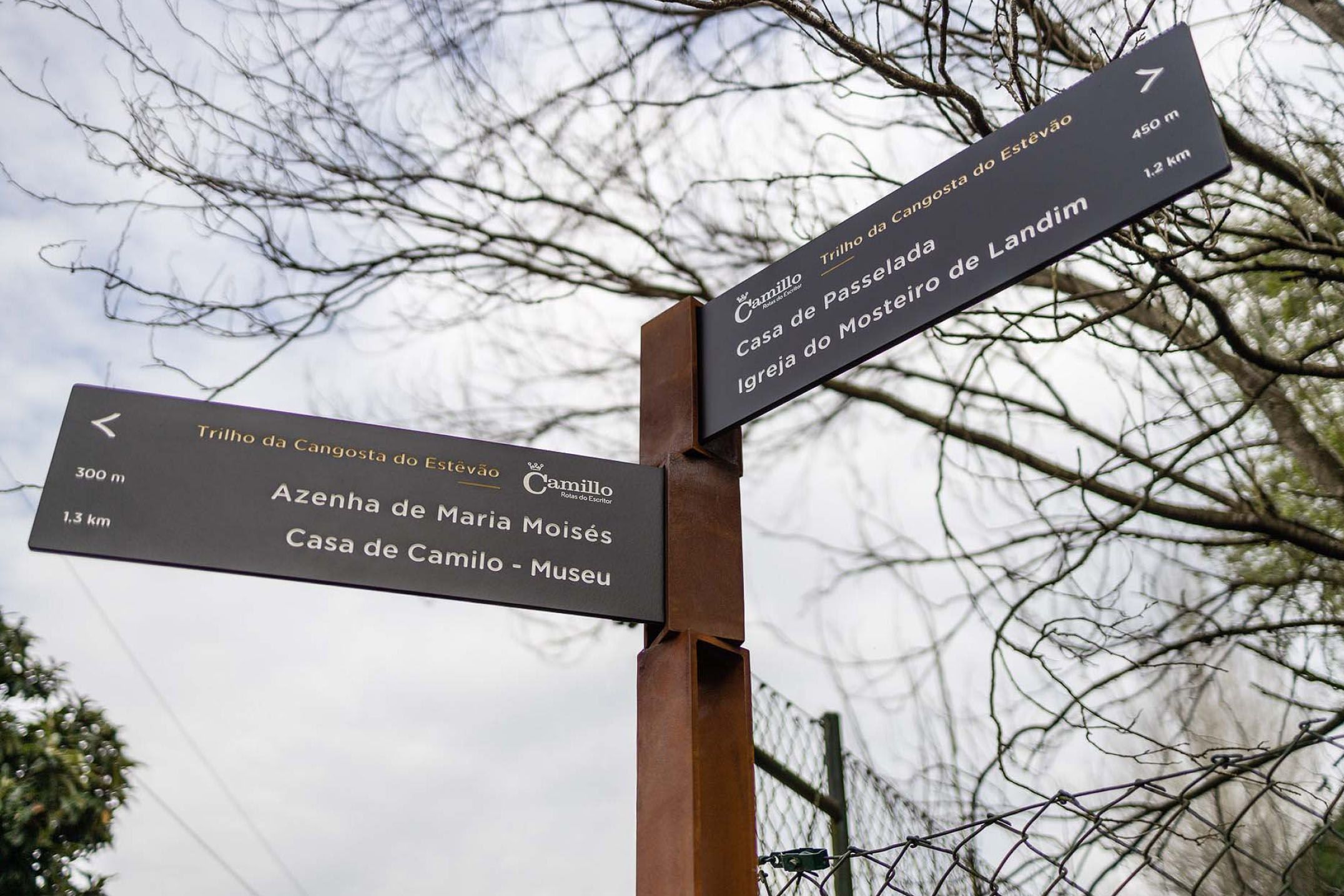
Frame directional signs
The wayfinding system is provided by Frame directional posts and signs in corten steel with HPL+ panels.
At several points along the route, pre-existing supports were used to fix the signage, reducing the introduction of new elements and preserving the perception of the surrounding urban and rural spaces. In other locations, the installation of poles proved necessary to ensure visibility, continuity, and clear wayfinding.
Material continuity and urban integration
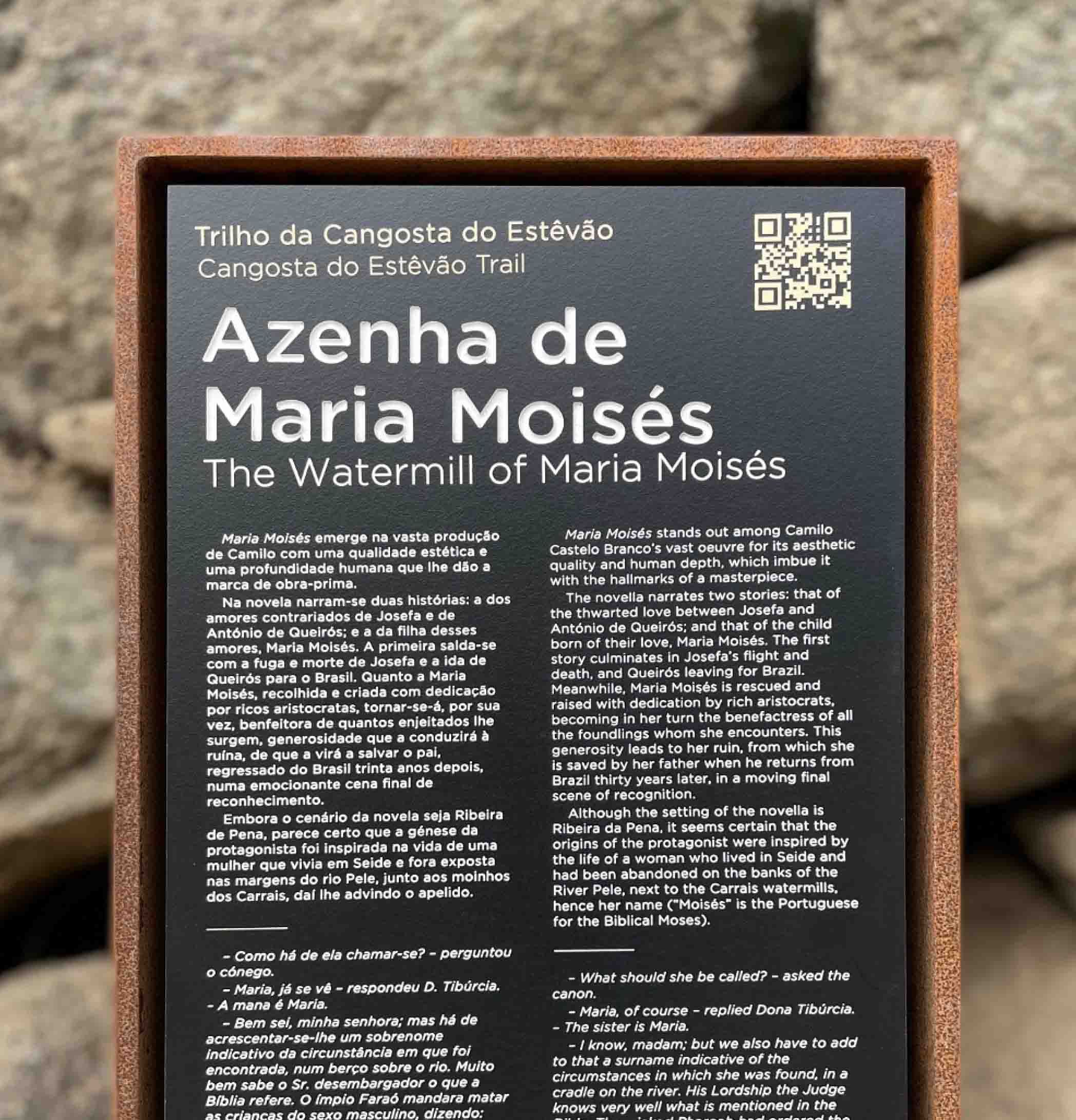
Totem Frame S by Floema Urban in corten steel
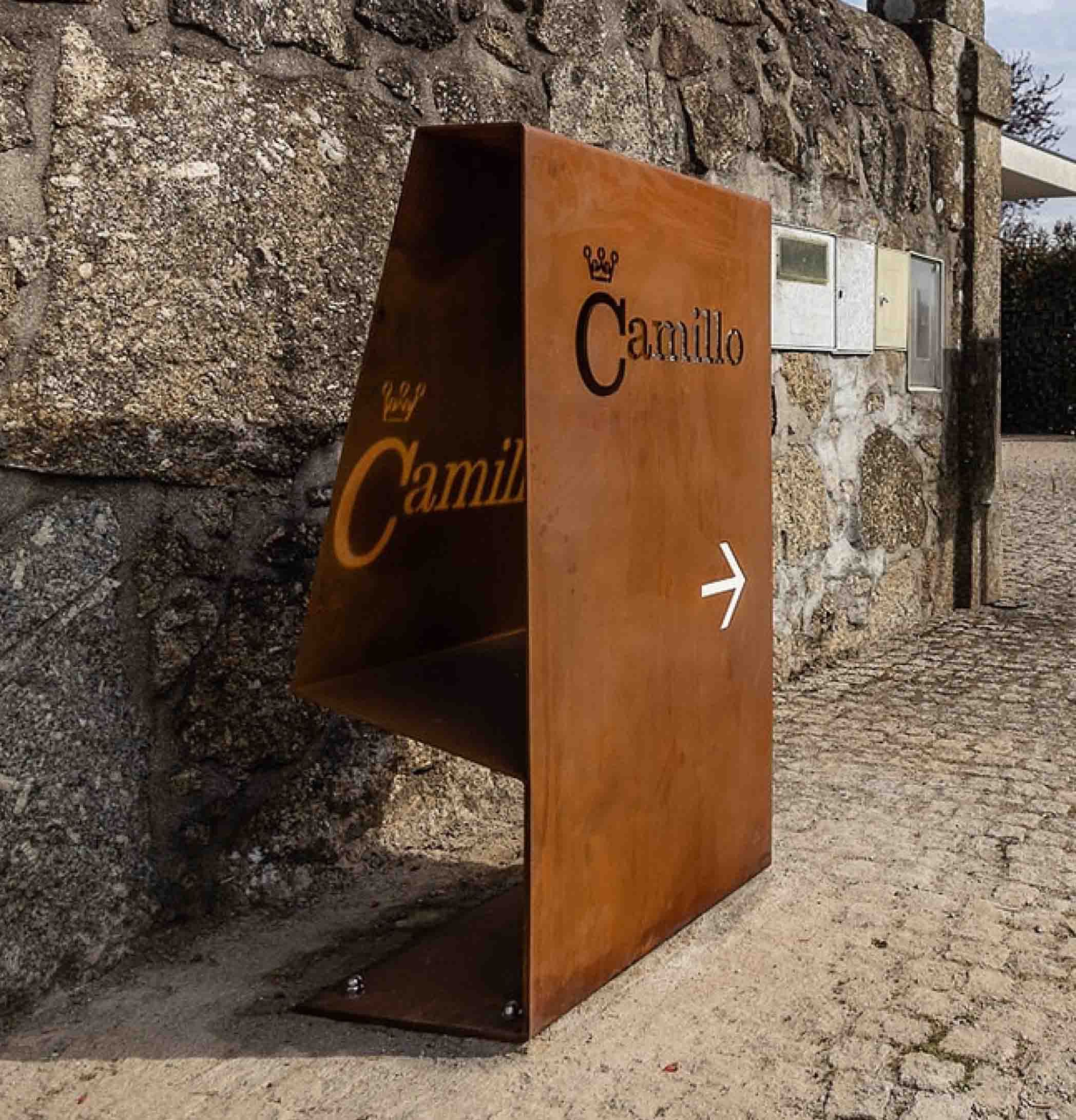
Custom urban directional totem in corten steel
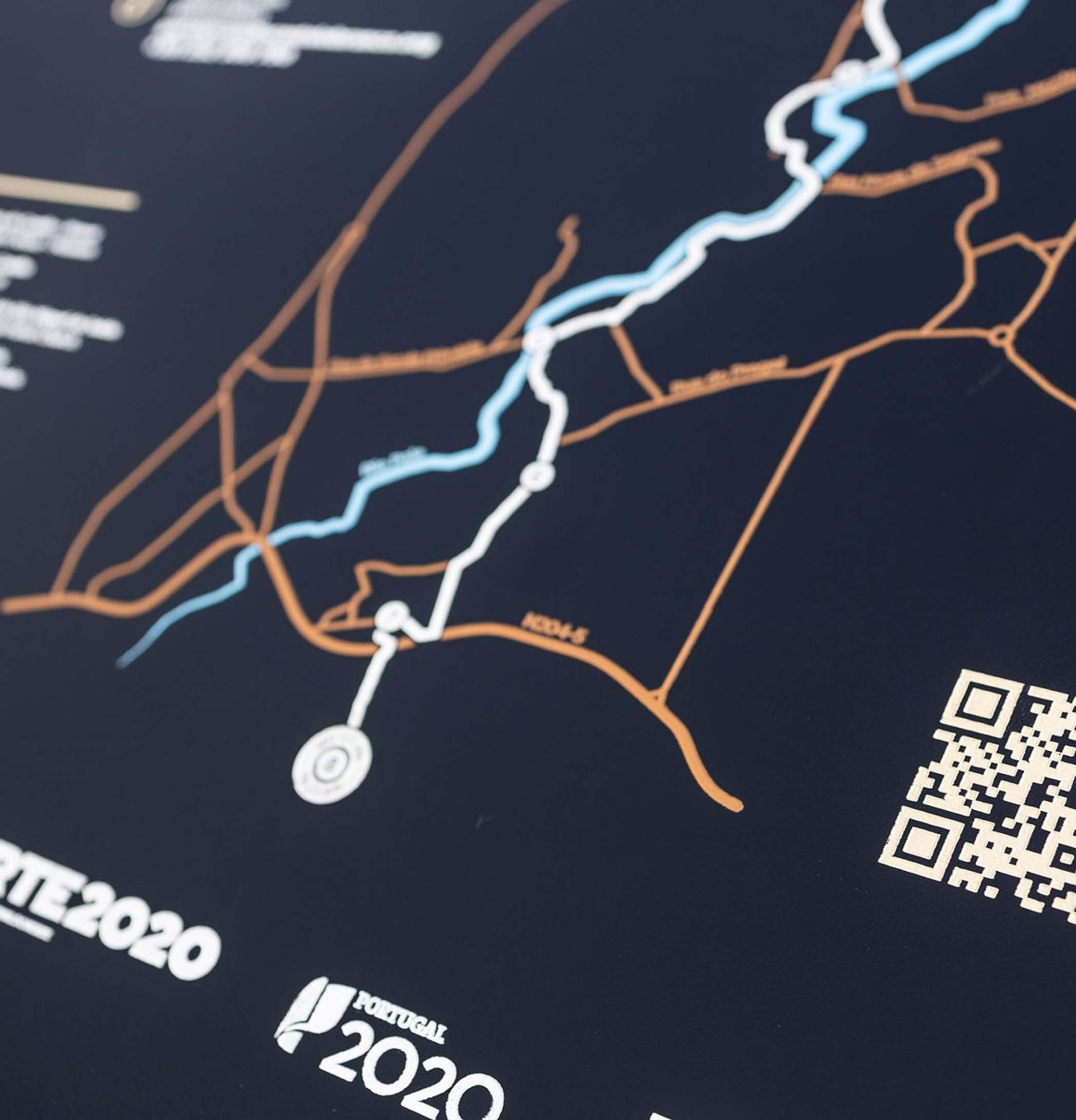
HPL+ Detail

Detail in corten steel
All supports were designed as discreet and permanent elements, integrating into the landscape without competing with its rustic and historical identity.
Corten steel and HPL+ ensure colour stability, resistance, and continuous legibility, while the formal language reinforces the unity of the route and its literary dimension.
Client:Municipal Council of Vila Nova de Famalicão
Route organization:Casa-Museu de Camilo Castelo Branco
Design:Floema and Reason
Materials:Corten steel and HPL+